The Lesson Observation That Made Me Cry in the Car
Lesson observation feedback can land harder than any other professional event. What a bad observation means in 2026 and how to recover from one.
The lesson itself had been ordinary. Year 10 Tuesday morning, a sequencing task on the causes of the First World War that I had taught a version of for four years. The deputy head sat at the back with an iPad. The class behaved. The activity worked. The plenary landed. I left the room thinking that was a solid lesson, probably good enough, and got on with the rest of my day.
The feedback meeting was at 16:00 on the Friday. The deputy head was friendly. He sat opposite me and read me, line by line, a half-page of carefully phrased areas for development. The phrase not enough evidence of meaningful challenge for the highest-attaining pupils appeared three times. The phrase limited use of formative assessment appeared twice. The phrase some lesson elements did work was the warmest thing in the document.
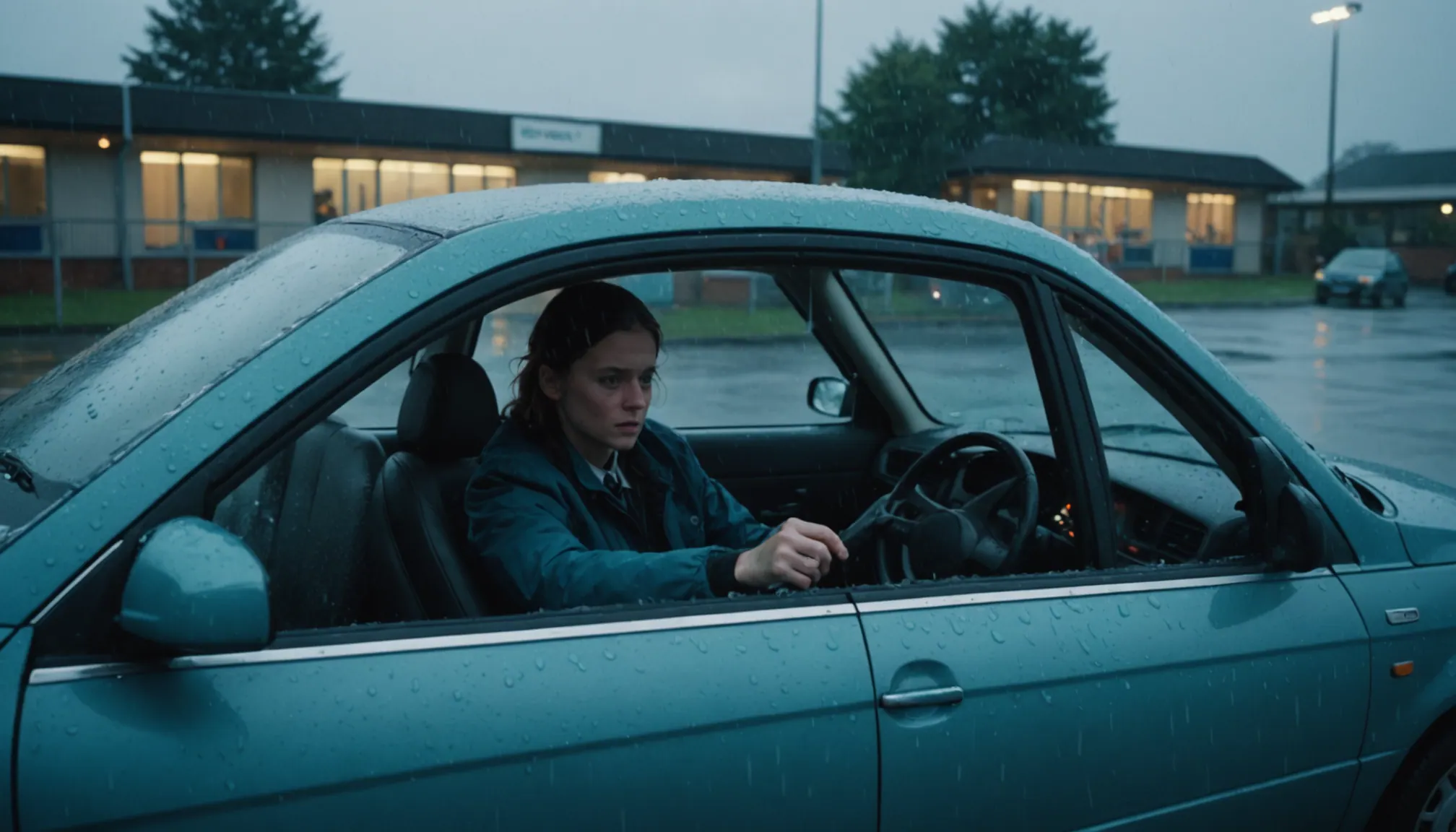
I nodded. I asked sensible questions. I thanked him for the feedback. I said I would think about it carefully and bring some thoughts to our next 1:1. I shook his hand at the door. I walked, deliberately at normal pace, to the staff car park. I sat in my car. And I cried, properly and silently, for eleven minutes, while staff and pupils walked past my windscreen.
This is the part of teaching that the people grading you do not see and do not have to account for. The way a half-page of professionally phrased feedback can compress four years of work into a paragraph, drop the paragraph into your inbox, and leave you sitting in a car park trying to remember whether you are actually good at the job you have given fifteen years of your life to.
This piece is the honest version of what a bad lesson observation does, what the feedback usually means, what is worth taking from it, and how to come back from a 16:00 Friday meeting that has emptied you out.
What a lesson observation actually is in 2026
The formal architecture of lesson observation in UK schools, post-2020, has flattened a lot of the old grading practices but reorganised the pressure rather than removing it. In most schools in 2026 you will encounter some combination of:
- Learning walks — short visits (5–15 minutes), often unannounced, usually focused on a specific question (e.g. how is retrieval practice landing across the department).
- Formal observations — typically 25–50 minutes, sometimes with the full lesson, often with a follow-up meeting and a written summary.
- Work scrutiny — paired with observation, looking at books and other artefacts.
- Pupil voice — short interviews with pupils about lesson experience, often used to triangulate the observation.
- Department/subject reviews — multi-day cycles in which a department is observed across many lessons.
Most schools no longer grade lessons (good, requires improvement etc.) — the grading has been formally moved away from in line with DfE and Ofsted guidance on classroom observation — but the absence of a formal grade does not mean the absence of consequence. The narrative summary often implies a grade, the implication is read accurately by the teacher being observed, and the consequence sequence (next observation, support plan, capability) still operates on the back of the implied grade.
This is worth saying out loud because most teachers who cry in the car after observation feedback are partly crying about a grade they were never officially given but which they could read clearly between the lines of the language they were given instead.
Why a single lesson observation can land so hard
Several structural reasons.
The single lesson stands in for the year. The observer was in the room for fifty minutes. The teacher was in that room for fifty hours that term, with the same class, over a sustained relational arc. The observation is a snapshot evaluation of a relational process. The mismatch in time scales means the evaluation can feel disproportionately weighted, because it is.
The feedback is one-directional and written. You receive a half-page document. You do not get the chance to add the half-page that explains what the lesson was a continuation of, what the previous lesson had been, why you chose the specific structure, what the next lesson was going to do, or what the class had been doing for the seven weeks before. Your half-page is the silent half of the meeting.
The evaluator sees the lesson; you live the lesson. The teacher is doing six different cognitive tasks simultaneously throughout the lesson; the observer is doing one. The observer can therefore notice things the teacher cannot — and also miss things the teacher feels in the room but cannot make visible. Both directions of asymmetry are real.
The feedback is from a person you have to keep working with. Unlike academic feedback, lesson observation feedback comes from someone you will sit next to in the next briefing, line-manage you for the rest of the year, or write your reference next August. The relational stakes are not low.
The professional identity stakes are high. Most teachers identify strongly with being a good teacher in a way that other professionals do not identify with being a good accountant. A weak observation report does not feel like job feedback. It feels like an identity correction.
The combination of these means that the same half-page of feedback that would feel like a manageable piece of professional input in another industry feels, in teaching, like a fairly heavy emotional event. That is structural to the role, not weakness in you.
What the feedback usually means — translated honestly
Some of the most common phrases in 2026 observation feedback, and what they usually mean.
- "Limited evidence of meaningful challenge for the highest-attaining pupils" — the observer wanted to see something specific (deeper questioning, an extension task, a sub-group activity) that wasn't present in the slice they saw.
- "More formative assessment was needed" — the observer wanted more visible mini-checks of understanding (mini-whiteboards, cold call, exit ticket).
- "Pupils were compliant rather than engaged" — the class was working but the observer judged the engagement to be functional rather than enthusiastic, which can be a fair observation and can also be the observer reading a class they don't know.
- "Pace dropped in the second half" — the lesson had a clear high-energy first half and a less clearly structured second half (often a real, fair piece of feedback).
- "Behaviour for learning was inconsistent" — there were specific moments the observer judged to be below the school's behaviour-for-learning expectations.
- "Use of the school's preferred lesson structure was not fully evident" — your lesson did not follow the specific structural template the school currently prefers.
The honest test of each piece of feedback is: if I had been the observer, would I have written this? The pieces of feedback you would have written yourself are the ones worth taking seriously. The pieces of feedback that don't match your lived experience of the lesson are worth pushing back on, in writing, calmly, with evidence. (See section below on the follow-up.)
What helps in the first 48 hours
The first 48 hours after a hard observation are when most teachers either set themselves up well for the recovery or quietly absorb the cost in a way that compounds. Five things help.
1. Do not reply to the written feedback for at least 24 hours.
The first reply you draft on Friday night will not be the reply you eventually send. Wait. The version you write on Sunday morning is calmer, clearer, and more useful.
2. Reread the feedback once, on Saturday morning, with a coffee.
Most observation feedback reads very differently 36 hours after the meeting. The bits that seemed catastrophic at 16:00 Friday often read as fair-to-normal feedback by Saturday morning. The bits that still feel disproportionate by Saturday morning are the bits worth flagging in your reply.
3. Talk to one person, not five.
The instinct is to discuss the observation with the entire department. This rarely helps and often makes the feedback feel more public than it is. One trusted colleague is the right size of audience for the immediate aftermath.
4. Draft a written response and ask whether it should be added to the record.
If parts of the feedback don't match your experience of the lesson, you have a right to a written response. The response goes on the record alongside the observation. Most schools will accept a calm, evidence-based response without resistance. The act of writing it is itself part of the recovery — it converts the experience from something done to you into something you have an active voice in.
5. Keep your weekend.
The temptation is to spend Saturday remaking every resource the feedback implied was inadequate. Do not. Spend Saturday on the parts of your life that do not need an observer's opinion of them. The remaking can wait until Monday, when you can do it from a calmer place.
How to actually use the feedback — afterwards
Once the emotional weight has cleared (usually 5–10 days), the feedback becomes more usable. The teachers I know who came out of hard observations strongest do a three-part exercise.
Part 1: What is true? Read the feedback as if it had been written about a colleague you respect. Which of the points would you, honestly, recognise as a real area of growth? Write those down. These are the bits worth working on.
Part 2: What is a school preference? Some feedback is about your teaching. Some feedback is about the specific lesson structure your school currently prefers. Both are legitimate, but they require different responses. Working on a genuine pedagogical weakness is career-developing. Working on becoming more legibly compliant with a school's preferred lesson template is a different kind of work, and worth distinguishing in your head.
Part 3: What is disagreement? Some feedback you simply disagree with. That's fine. Note it, decide whether it's worth contesting formally, and either let it go or write a measured response. Disagreement is not the same as not coping with feedback.
This three-part split tends to convert the feedback from a single overwhelming paragraph into three sortable categories, and the categories are easier to act on than the paragraph.
When the observation is part of a wider pattern
Most observations stand alone. Some observations are the leading edge of a wider conversation, particularly if they are being followed up by more frequent learning walks, additional work scrutiny, or a meeting that uses words like support or development plan. (See The Day They Put Me on a Support Plan for the longer treatment.)
If you find yourself being observed substantially more frequently than your colleagues, or if multiple feedback documents are stacking up in a short period, that is a signal worth taking seriously — not as confirmation that you are failing, but as confirmation that the school is documenting something. Your union officer is the right first call, before the situation escalates.
What I would tell the version of me in the car park
Three things.
The feedback is one person, one lesson, one moment. The school year is two thousand moments. The single moment got written down. The other one thousand nine hundred and ninety-nine did not. Do not let the one written-down moment become the year.
Cry properly, then read it again on Sunday. The car park cry is fine. It is the body discharging the load. Once it is done, do not re-read the feedback that night. Re-read it on Sunday morning, when the system has slept. The document will be smaller on Sunday.
Most teachers come out of hard observations stronger. This is genuinely true, and I would not have believed it in the car park. The hard observations sit with you long enough to surface real pedagogical thinking. The thinking, done over the next six months, makes you better in ways the easy observations would not have. The car park is the worst part. The rest is structural growth.
If you are reading this in a car park on a Friday evening, with eleven minutes of crying behind you and a half-page of feedback open in your inbox — what you are feeling is in scale with what happened, the document is smaller than it looks, and the version of you in six months will read it differently. Drive home. Have the weekend. Reply on Sunday morning, slowly.
FAQ: lesson observation feedback recovery
Is it normal to cry after a lesson observation? Yes — very common, especially with formal observations or graded equivalents. The single-lesson, written-feedback, asymmetric format of observation is structurally hard, and the emotional response is in scale with it.
Do lessons still get graded in 2026? Most schools have moved away from formal grading in line with DfE and Ofsted guidance, but narrative summaries often imply grades in practice. The implied grade is still consequential.
Can I challenge feedback I disagree with? Yes. You have the right to add a written response to the observation record. The response should be calm, evidence-based, and ideally drafted at least 48 hours after the feedback meeting, not in the immediate aftermath.
Should I tell my union about a hard observation? Not for a single observation. If observations are happening at increased frequency, or are being followed by language like support, development plan, or capability, contact your union the same week.
How long does it take to recover from a bad observation? Most teachers describe the immediate emotional impact lasting 5–10 days, and the wider professional confidence rebuild taking 2–4 months. Both timelines are normal.
If part of what made the lesson harder to land in the way the observer wanted is the prep load that compresses your planning into the gaps in the day, TAyumira's free lesson planner takes the typing-and-formatting layer of preparation off your plate so the planning bandwidth goes to the pedagogical thinking the observer is actually looking for. Pedagogy-aware. No card.