When the OFSTED Email Lands at 7:42 a.m.
The OFSTED notification call is one of the most acute stressors in UK teaching. What actually happens to the body, the school, and you — and how to survive it.
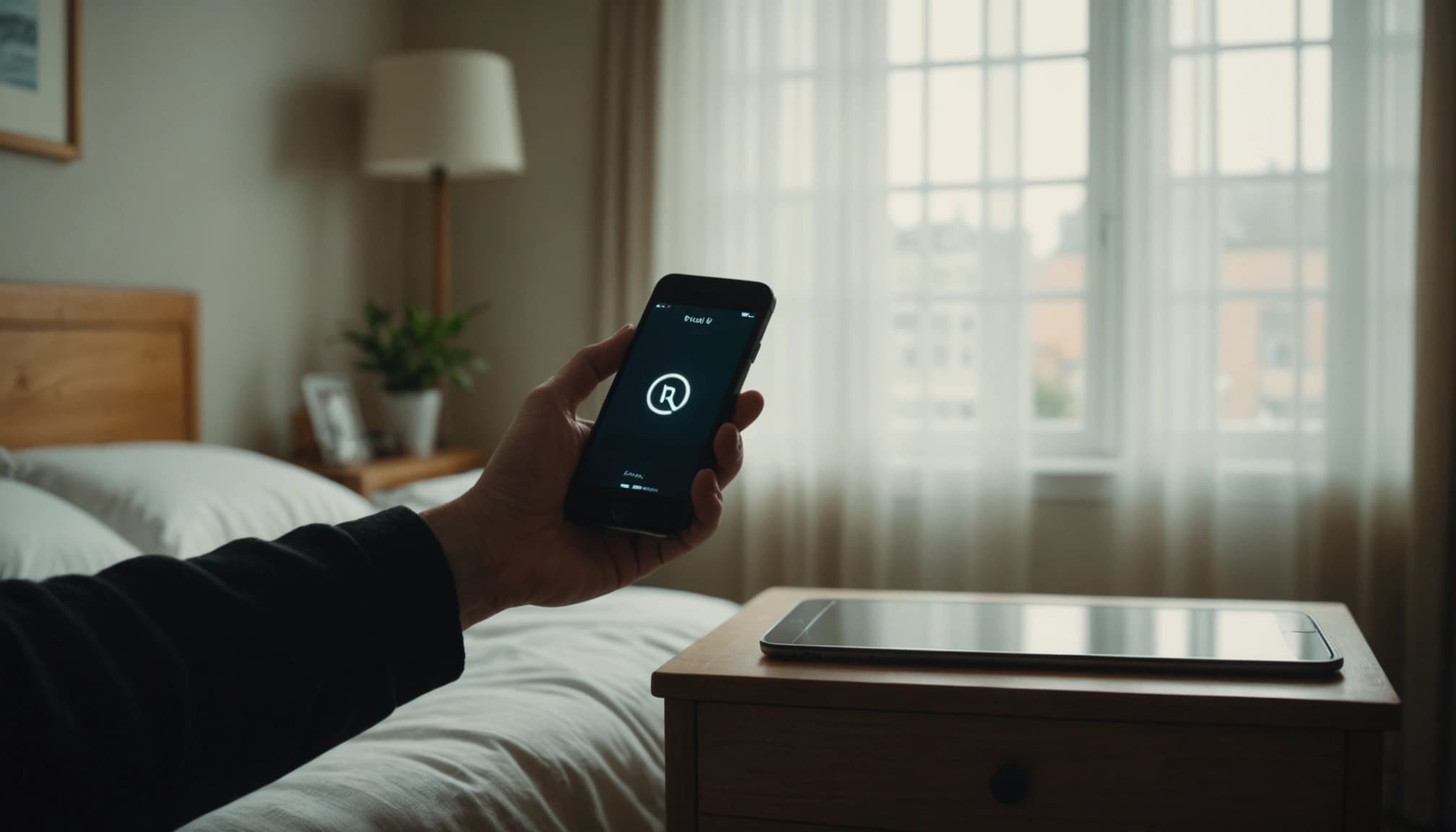
You wake up the way you wake up every weekday. You reach for the phone before you have fully decided to. The lock screen shows three missed messages from your head of department, all sent in the last six minutes. Two are blank. The third just says call me. The clock reads 7:42 a.m.
You know, before you have read another word, what has happened. A part of your nervous system that you did not know existed — a small, pre-installed circuit dedicated entirely to this exact moment — has already activated. Your hands are cold. Your pulse is in your ears. You sit up. You make the call. By 7:48 you are walking faster than you have ever walked through your own kitchen. By 8:02 you are in the car. By 8:31 you are inside the building, where forty-six other adults are walking faster than they have ever walked through corridors they have walked down for years.
This piece is about that moment, what is actually happening to your body and your school, what the realistic 48-hour response looks like, and how teachers come out the other side of an OFSTED inspection still recognisable to the people who love them.
What actually happens when the call comes
OFSTED's standard model for routine inspections in 2026 is a phone call to the headteacher around 8:00-9:00 a.m. on the morning before the inspection arrives. You and your colleagues will normally find out within minutes, via cascading WhatsApps, leadership-team calls, year-group emails, and the unmistakable atmospheric change in school corridors that experienced staff can detect from the staffroom door.
Three things happen in your body in the next hour, and recognising them is part of how you stay functional.
Cortisol surges hard. Within minutes of reading the message, the HPA axis dumps cortisol into your bloodstream at a level your body has been preparing for for years. The narrowing of attention, the cold fingers, the hyper-clarity of thought followed by sudden patches of fog — all of these are textbook sympathetic-nervous-system responses to an extreme but anticipated stressor.
Time perception distorts. Hours feel like minutes. The drive in is a blur. The first morning of an inspection produces some of the most compressed, dreamlike subjective time most teachers will experience in their careers. This is normal. It is not a memory problem.
The sleep window collapses. Most teachers who have lived through an inspection describe sleeping between four and five hours that night, usually broken sleep, mentally rehearsing tomorrow's lessons. The day-two performance is being delivered by a sleep-deprived nervous system, and the school knows this — accountability does not.
The British educational psychology literature on inspection stress is sparse but consistent: cortisol levels measured in teachers during inspection days are comparable to those measured in junior doctors during high-pressure on-call shifts. The role is acutely stressful. Recognising this is acutely stressful is part of how you function inside it.
What happens in the school in the first 90 minutes
If you have never been through an inspection, the first 90 minutes inside the building feel choreographed by people you cannot see. In practice, what is actually happening is a coordinated set of leadership processes that are largely outside your direct control as a classroom teacher. Knowing what they are reduces the unhelpful sense that you should be doing more.
The senior leadership team is on calls with each other, with the inspector or the inspection team's lead, and with their MAT or local-authority contacts. They are confirming the school's self-evaluation form (SEF) is current, the safeguarding records are accessible, and the inspection schedule has been agreed.
Heads of department are meeting with their teams to clarify any specific concerns about the curriculum, the year groups inspectors are most likely to focus on, and the data the leaders want emphasised in any deep-dive subject conversations.
You — as a classroom teacher — are not centrally involved in any of this. Your job for the next 24 hours is much narrower: deliver lessons that are recognisable as your normal practice, and be ready to answer one or two questions if an inspector lands in your room.
The 48-hour realistic response
The vast majority of OFSTED-prep advice articles tell teachers to do impossible things — overhaul their lesson plans for tomorrow, redo all marking, rewrite their entire scheme of work overnight. This is not realistic and is rarely the right move. Inspectors, in 2026, are looking for consistency over time, not perfection on the day. Your job is to deliver what you would normally deliver, with the seams a little tidier.
The realistic 48-hour response has five elements.
1. Decide what stays and what goes
Look at tomorrow's lessons. Identify the one or two that genuinely need work. Leave the rest as planned. Resist the temptation to redesign everything — fresh lesson plans built overnight are typically worse than your normal lessons. The teachers who do well in inspections are usually the ones whose Wednesday lesson looks the same as their last fifty Wednesdays.
2. Compress the prep that does need doing
For the one or two lessons that genuinely need work, compress the prep using whatever tools strip the typing-and-formatting layer. AI lesson planning tools like TAyumira's free planner can rebuild a lesson plan, slides, and a worked example in 15 minutes when the alternative would be three hours of overnight prep. This is not cheating. This is using the right tool for a one-off load spike.
3. Sleep is more important than further prep after 9 p.m.
If you are still working at 9 p.m. on inspection-eve, the marginal value of further prep is lower than the marginal value of sleep. A four-hour-sleep teacher delivers worse lessons than a six-hour-sleep teacher with imperfect prep. Stop at a sensible time. The inspector will be looking at how you teach, not at how late you stayed up.
4. Run the day in chunks
Inspection days are mentally exhausting because the body is in sustained sympathetic activation for 7-8 hours. Run the day in 90-minute chunks with deliberate downshifts in between (a walk to the photocopier, two minutes outside, a bottle of water). The teachers who collapse on day two are usually the ones who tried to maintain hypervigilance for the entire day one.
5. Eat. Drink. Use the bathroom.
This sounds patronising. It is not. Teachers under acute inspection stress consistently report not eating, not drinking, and going to the toilet only at lunch. By 2 p.m. the cumulative physiological drag on cognition is meaningful. Set phone alarms if you have to.
What inspectors are actually looking for
A common misperception is that inspectors are hunting for failures. In practice, inspectors are calibrating against a small number of judgements — quality of education, leadership, behaviour and attitudes, personal development, and (for primaries and secondaries with 16-19 provision) sixth form. Within quality of education, they are looking for evidence of curriculum intent, implementation, and impact.
In a single classroom visit, an inspector is unlikely to score your lesson on any of these. They are likely to ask one or two questions to understand how today's lesson fits into the wider sequence — why this lesson, why now, how does it build on what came before, how will you check what they understood. If you can answer those four questions briefly and clearly, you are functionally giving the inspector the curriculum-implementation evidence they came for.
This is why the most useful pre-inspection investment is not lesson re-design. It is rehearsing those four answers for any class an inspector might walk into. Five minutes per class.
The thing nobody tells first-time inspection teachers
After the inspection ends, there is a strange three- or four-day period where the body is still in sympathetic activation but there is nothing left to be activated about. Sleep is broken. Mood is volatile. Minor things produce disproportionate reactions. This is post-acute-stress recovery. It is normal. It usually resolves within a week.
Schools do not generally acknowledge this period or build recovery into the days after an inspection. The teachers who emerge intact are usually the ones who give themselves permission to rest, eat, sleep, and re-baseline rather than treating the post-inspection days as ordinary working days.
If your school has just been inspected and you are reading this in the post-inspection week, the small thing tonight is to go to bed early, eat a proper meal, and not check email past 8 p.m. The body is repaying the inspection cost in the only currency it has — recovery.
The wider context
OFSTED inspection is one of the most acute stressors built into the UK teaching profession. It is not the only one — workload, parent communication, accountability paperwork, and behaviour management are all chronic — but inspection is among the most concentrated. For the longer argument about the cumulative cost of all of this, see The Inevitable Toll of Teacher Burnout.
For the longer argument about the workload patterns that make inspection-prep so impossible to absorb, see The Quiet Quitting Wave Hitting British Schools — which is, in part, a workforce response to inspection-style accountability becoming a year-round rather than a once-every-few-years experience.
If you are inside the inspection week now: drink water, eat lunch, sleep when you can, and remember that inspectors are looking for consistency over time, not perfection tomorrow.
You will get through this. Almost everyone does.
FAQ: surviving an OFSTED inspection as a classroom teacher
What time does OFSTED usually call? For routine section 5 inspections, the notification call to the headteacher comes around 9:00 a.m. on the day before the inspection arrives. Information cascades through schools within minutes.
Should I redesign my lessons overnight before an inspection? No. Inspectors look for consistency over time, not perfection on the day. Identify the one or two lessons that genuinely need work and compress the prep with AI tools. Leave the rest as normal.
How long does an OFSTED inspection last? Routine section 5 inspections typically last two days. Inspectors arrive on day one and feed back to the headteacher at the end of day two. The framework and timings are detailed at gov.uk's school inspection handbook.
What do inspectors ask classroom teachers? Usually four core questions: why this lesson now, how does it build on previous learning, how will you check understanding, and how does this fit into your wider curriculum sequence. Rehearse a brief answer for each class you teach.
How can I reduce inspection-eve workload? Compress lesson prep using pedagogy-aware AI tools — TAyumira's free planner can rebuild a lesson plan, slides, and worked example in 15 minutes that would otherwise take hours. Sleep is more important than further prep after 9 p.m. on inspection eve.
If you are facing a high-stakes lesson — observation, deep dive, parents' evening, or inspection — TAyumira's free lesson planner rebuilds a structured, evidence-informed lesson plan with slides and assessment in minutes. Pedagogy-aware. No card. Designed for teachers, by a teacher.