The Pay Slip That Made Me Cry in the Car Park
Teacher pay in 2026 isn't just disappointing — it's a measurable crisis. The numbers, the lived experience, and what teachers are actually doing about it.
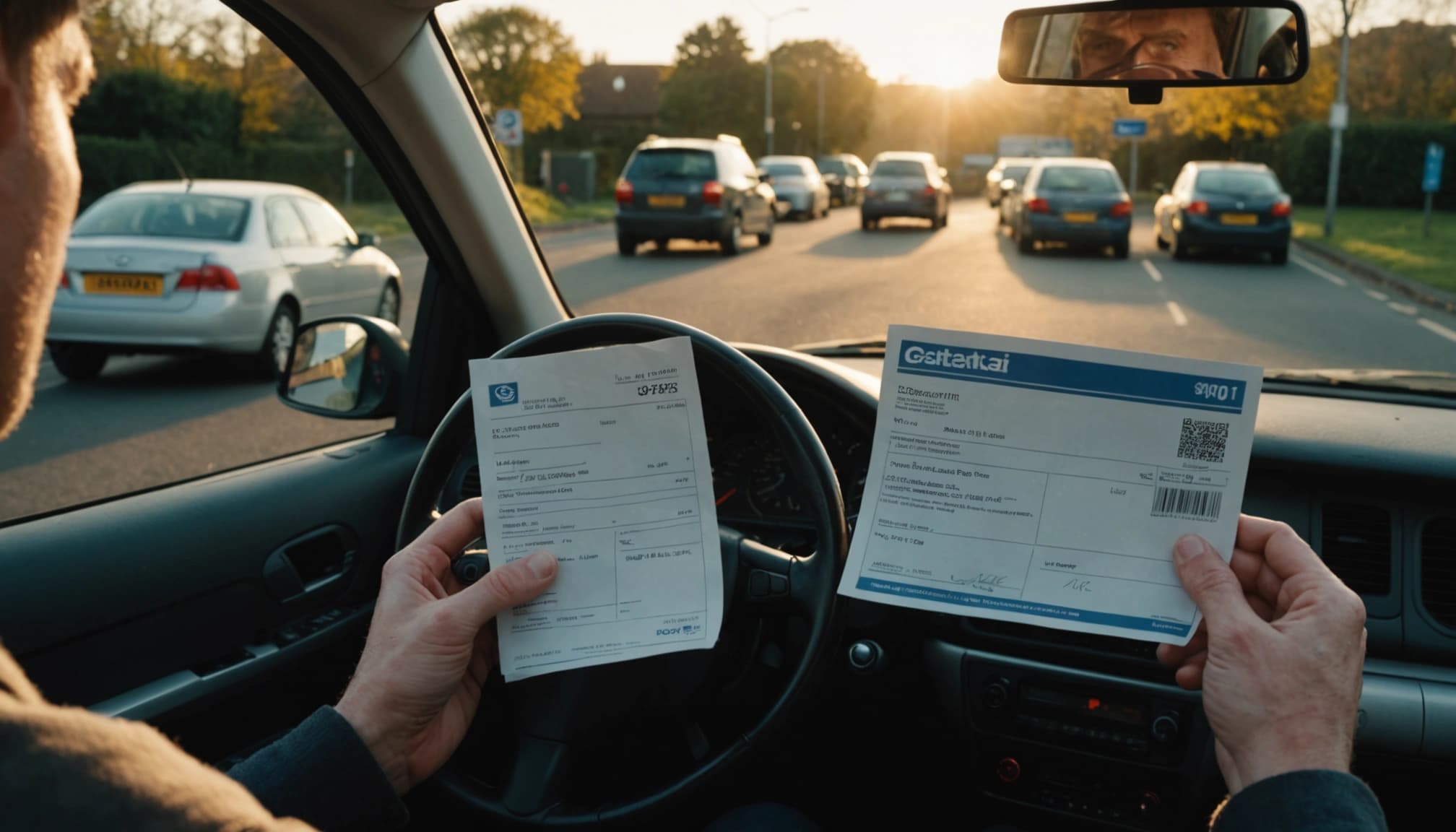
It was a Tuesday. I had just done a Tesco shop and was sitting in the car about to drive home. The radio was on low. I opened the email from payroll on my phone — the same email that arrives on the 22nd of every month — and looked at the figure I had looked at, with no particular emotion, every month for years.
I cannot tell you what changed in that exact moment. The number wasn't different from last month's. The shop wasn't more expensive than last month's. But something inside me did the math out loud for the first time. The hours I had worked that month, against the figure on the screen, against the cost of the bags of food in the boot. And I cried. Quietly, properly, for about four minutes, in the driver's seat of a Ford Focus in the Tesco car park on the A414.
I am not telling this story for sympathy. I am telling it because it is one of the most under-discussed parts of being a teacher in 2026, and because almost every teacher I have spoken to in the last twelve months has had a version of this moment. The triggers vary. The shop. The boiler quote. The school trip the kids want to go on. The car insurance renewal. The single email from the bank that said insufficient funds on a direct debit you forgot was that day. But the moment is the same — the moment your nervous system finally lets you feel what your bank account has been quietly telling you for years.
This post is the honest version of teacher pay in 2026 — the actual numbers, the actual lived experience of those numbers, why the conversation is harder than the headlines suggest, and what teachers are actually doing about it.
What teacher pay actually looks like in 2026
The headline figures are familiar but worth revisiting in the cold light of a payslip. According to the Department for Education's School Workforce Census and the STRB (School Teachers' Review Body) annual reports, the 2026 teacher pay structure in England (rounded for simplicity) is roughly:
- ECT 1 (newly qualified, year 1): £31,650
- ECT 2: £33,500
- Main scale top: £45,500
- Upper Pay Range top: £50,000
- Leading Practitioner / TLR / middle leadership: typically £45-65k depending on responsibility allowances
- Senior leadership (deputy, head): £60-130k+ depending on school size
Outside London (M1-M6), most teachers spend their entire main scale career in the £30-45k range. With years of below-inflation pay rises since 2010, the Institute for Fiscal Studies has calculated that teacher pay in real terms is roughly 12% lower than it was in 2010. In simpler terms: every teacher in the country is doing more work than their 2010 counterpart for less real money.
This is the macro data. But the macro data isn't the part that makes you cry in the car park. The part that makes you cry is the lived hourly rate.
The lived hourly rate
The pay scales above are annual. To work out what a teacher actually earns per hour, you have to honestly count the hours.
The DfE's own Working Lives of Teachers and Leaders Wave 3 survey puts the average teacher working week at 48.4 hours. Multiplied across 39 working weeks plus partial work in school holidays (the realistic figure for most teachers is around 1,950 hours per year of actual work), that produces lived hourly rates roughly:
- ECT 1: £31,650 ÷ 1,950 ≈ £16.23 per hour
- Main scale top: £45,500 ÷ 1,950 ≈ £23.33 per hour
- TLR/middle leader: £55,000 ÷ 1,950 ≈ £28.20 per hour
These numbers are sobering. The lived hourly rate of a teacher five years into their career, calculated honestly, is below what their school's catering staff earn under London Living Wage agreements. The lived hourly rate of an ECT in their first year is roughly the same as a Costa barista with 18 months' experience — except the barista doesn't take the job home for three hours every evening.
The first time you do this calculation for yourself, it changes how the payslip lands. The Tesco car park moment is what happens when the calculation lands on a body that has been ignoring it for years.
The cost-of-living crisis hit teachers harder than most professions
Three structural factors made the 2022-2026 cost-of-living crisis disproportionately heavy for teachers.
Rents and mortgages outpaced pay. Teachers move for jobs less than other graduate professions because schools are tied to specific places. Many teachers are stuck in expensive housing markets without the flexibility to move to cheaper ones.
The long hours preclude side income. Most professions have evening and weekend availability for second jobs, freelance work, or upskilling. Teachers do not — their evenings and weekends are already absorbed by lesson planning, marking, and parent communication. The commonly-cited "side hustle" advice for high-cost-of-living anxiety simply does not apply to teaching households.
The pension that was meant to compensate is also less generous. The Teachers' Pension Scheme reforms since 2015 reduced the value of the pension to most teachers under 45. The argument that "the pension makes up for the pay" is increasingly hollow for the post-2015 cohort.
The result is a workforce in which roughly 45% of teachers report financial stress affecting their daily decisions, according to the Education Support Teacher Wellbeing Index 2024. That's not a profession with some financially stressed members. That's a profession in which financial stress is the median experience.
What teachers are actually doing about it
In conversations with teachers across phases over the last two years, three response patterns recur.
1. Quietly tutoring on weekends
This is by far the most common response. Private tutoring rates in 2026 average £35-45 per hour (sometimes higher in London or for GCSE/A-level subjects). Two hours a Saturday at £40/hr is £320 a month, which moves the household budget from "tight" to "manageable." The downside: it is more teaching, in evenings and weekends that are already short, and many teachers describe it as the sustainable form of overwork that prevents the unsustainable form.
2. Internal moves into TLR / middle leadership
Some teachers respond to the financial pressure by moving into middle leadership for the TLR (Teaching and Learning Responsibility) allowance — typically an extra £3,000-12,000 per year. The trap is that the additional cognitive load is rarely proportional to the additional pay, and many teachers who took TLR roles for the money end up paying for it in workload (see The Promotion That Nearly Ended My Marriage).
3. Leaving the profession
The hardest response and the most common in the longer term. Teacher retention to year 5 is now around 70%, according to the DfE's school workforce data. Many of those who leave move into instructional coaching, EdTech product, ITT, exam-board work, or — in the most common single move — corporate L&D and training, where the lived hourly rate is often double the teacher equivalent.
The honest framing of leaving is not as a failure but as a rational economic decision in a profession that has stopped being able to compensate the work it requires.
What this means for the conversation we should be having
Two things worth saying clearly.
The conversation about teacher pay is not a "want more money" conversation. It is a "the role's structural compensation has fallen below what is sustainable for an adult professional supporting a household" conversation. These are different conversations. Teachers framing it as the second one, rather than the first one, are likely to be heard better.
Workload compression is not a substitute for fair pay. I have spent a substantial portion of my professional life building TAyumira, an AI tool for compressing the lesson-planning layer of teacher workload. It saves teachers 30-40 minutes per evening. That is real and important. It does not, however, address the underlying structural problem that the 48-hour week is being delivered for a 30-hour-week wage.
For the longer argument about the systemic toll of teaching including its compensation gap, see The Inevitable Toll of Teacher Burnout.
What I would say to the version of me in the car park
Three things I would say to the version of me sitting in that Ford Focus crying at a payslip on a phone.
The number is not your fault. The figure on the screen is a measurement of what the country has decided to pay teachers in 2026, against a real cost of living. It is not a measurement of your worth. The conflation of those two — paid worth and personal worth — is one of the things that makes teaching financially-emotionally exhausting in a way that other underpaid professions are not.
The crying is data. It is the body's measurement of accumulated dissonance between effort and reward. Cry. Then drive home. Then have a real conversation with the person you live with about the structural decisions ahead of the household — moving cities, changing roles, taking the second income, leaving the profession, all of these are options.
Leaving is allowed. I want to underline this because most teachers reading this will resist it. The version of you that is teaching in 2026 was not promised the role you are in. The compact you signed up for has been quietly altered, term by term, year by year, since you started. You owe the children loyalty during the days you are with them. You do not owe the system a career it has stopped paying for.
If you are reading this on a difficult Tuesday in a supermarket car park, the small thing this week is to do the lived hourly rate calculation honestly, and then have one real conversation with the person you live with about what you actually want to do next. The crying does not have to mean leaving — but it should mean choosing.
FAQ: teacher pay in 2026
Has teacher pay actually fallen in real terms? Yes, by the IFS's most recent calculation, by approximately 12% in real terms compared to 2010. Some years had small above-inflation increases (notably 2023-2024), but the cumulative real-terms position remains substantially behind 2010 levels.
What is a realistic teacher hourly rate? On main scale, accounting for the actual 48-hour week, a typical teacher's lived hourly rate is between £16-£24 per hour. This is below the equivalent rate for many graduate-entry professions and substantially below private tutoring rates the same teachers can charge.
Is moving into middle leadership worth it for the pay rise? Sometimes. The TLR (Teaching and Learning Responsibility) allowance ranges from roughly £3,000 to £15,000 depending on the role. Many middle leaders find the additional workload exceeds the additional pay on a per-hour basis. Worth doing the maths before saying yes.
Should I leave teaching for financial reasons? This is a legitimate question and a legitimate decision. Many teachers move sideways into instructional coaching, EdTech, ITT, examining, or corporate L&D for materially better lived hourly rates. The financial argument is not the only consideration but it is a valid one.
Can workload-compression tools help with the financial issue? Indirectly. Tools like TAyumira's free lesson planner can give back 30-40 minutes per evening, which can be used for tutoring, freelance work, second income, or simply not being burned out enough to keep working. They do not, however, fix the underlying pay issue — they just make the work the pay is buying more bearable.
If you're a teacher considering a side income through tutoring or freelancing, TAyumira's free lesson planner compresses your school-day planning workload by 30-40 minutes per evening, giving you the bandwidth to actually do the side work. Pedagogy-aware. No card.