The Silence After You Tell a Class You're Leaving
How to tell a class you're leaving teaching — what actually happens emotionally, what to say, what to leave unsaid, and why the silence afterwards lands so hard.
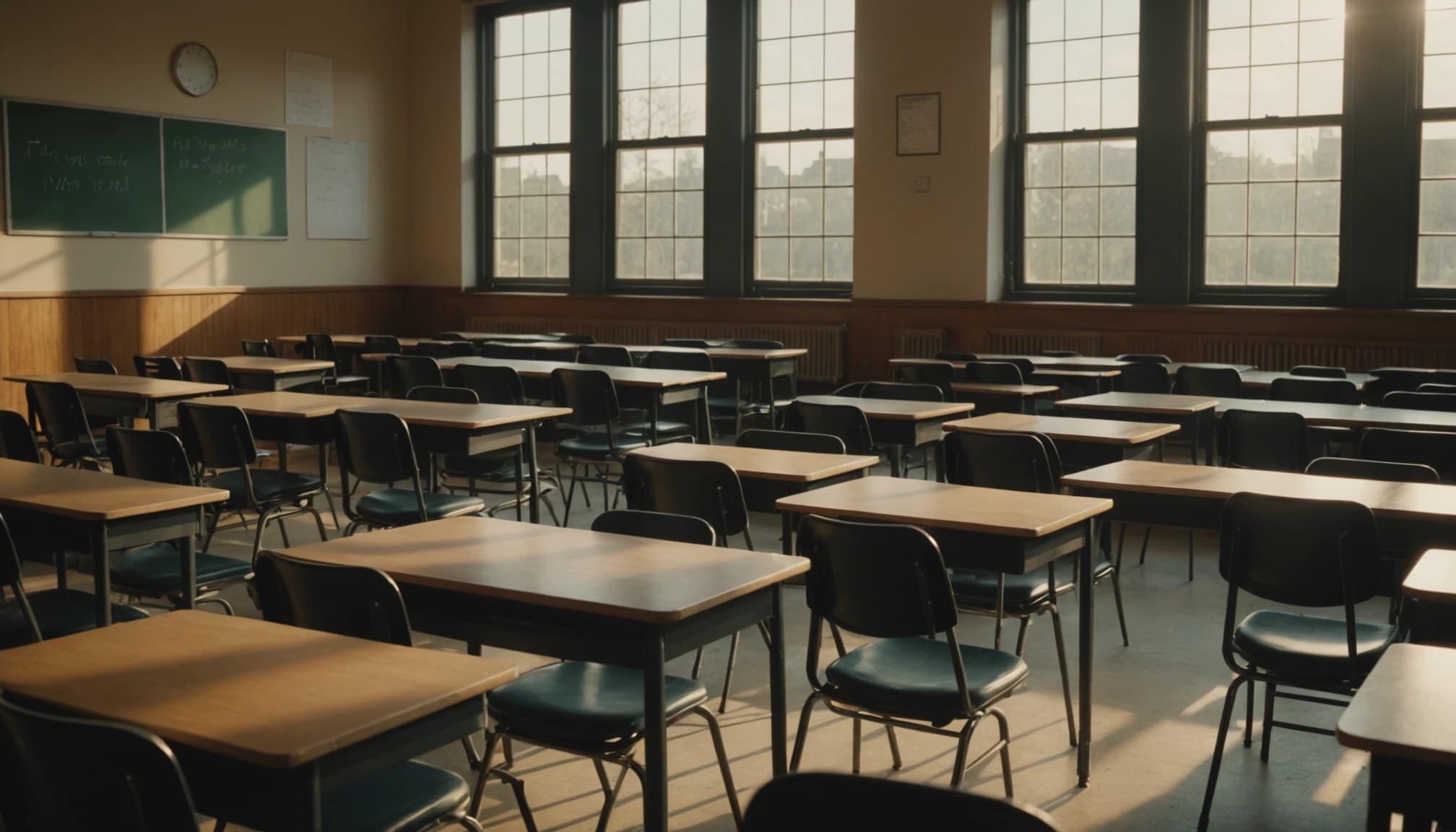
You have been rehearsing the sentence for three weeks. You have written it down five times in different notebooks. The version you are going to use is short, professional, and emotionally controlled. You are going to deliver it in the last five minutes of the lesson, after the activity but before the bell, so that there is enough space for them to hear it but not so much space that the rest of the lesson collapses into goodbye-energy.
You stand at the front. You do the thing teachers do when they are about to say something significant — you wait until the room is settled, the way you have done a thousand times, the way you no longer have to think about. You say the sentence. You say it almost exactly as you rehearsed it.
And then there is the silence.
The silence is the part nobody warned you about. The silence has texture. It has weight. It is unlike any other silence in a classroom. Some teachers describe it as eight seconds. Some describe it as a minute. Subjectively, it lasts as long as the next part of your life does — that strange, suspended pause in which the room is processing what you said and you are processing the fact that you said it.
This piece is about the moment of telling a class you are leaving teaching, what actually happens emotionally for you and for them, what to say and what to leave unsaid, and why the silence afterwards is one of the most under-discussed moments in a teaching career.
Why this moment is harder than people think
Teachers tend to underestimate this conversation in advance. They have been thinking about leaving for months — sometimes years. They have done the cost-benefit, the financial planning, the application for the next thing, the difficult conversations with partners and friends. By the time they are standing in front of the class, they assume the announcement is the easy bit.
It is rarely the easy bit. Three things compound to make it harder than expected.
You are telling people who didn't choose this. You chose to leave. They didn't get a vote. The asymmetry creates a quiet, unearned guilt — children whose academic year has been built around your continuity are being told the continuity is ending, and there is nothing they can do about it.
You don't know what they will do with the information. Some classes go quiet. Some get angry. Some get tearful. Some — most often the classes you assumed cared least — get protectively defensive, asking questions about whether they did something wrong, whether you didn't like them, whether you would have stayed if a different child had behaved differently. None of these reactions are predictable in advance.
You suddenly remember that they are still children. In the moment of telling them, the years of professional distance dissolve. You see, briefly, that you have spent a meaningful chunk of their childhood as one of the more present adults in it. The realisation is not always welcome. It is rarely something you can afford to fully feel in the eight seconds of silence at the front of the room.
The five reactions classes typically have
Different classes react differently. Five patterns recur, and recognising them in advance helps you stay grounded when it lands.
1. The flat acceptance
Some classes — usually the older, more transactional ones — give you a polite, flat acknowledgement and continue with the lesson as if the announcement had been about a fire drill. This can feel cold. It is rarely indifference. It is usually their way of staying functional inside an environment that has just changed without their consent.
2. The questions
Some classes — usually the curious, articulate ones — immediately have questions. Why? Where are you going? Who will replace you? Did you tell us first or did you tell someone else first? The questions can feel intrusive. They are usually a coping strategy: the children are taking back control of an event by asking enough questions to feel they have understood it.
3. The protest
Some classes — usually younger, or close-knit, or the ones you've taught for several years — protest. That's not fair. Can't you stay? What about [specific topic in the syllabus]? What about [specific upcoming event]? The protest can be touching and exhausting in equal measure. It is rarely about you specifically. It is about the discontinuity of the change.
4. The crying
Some children, in some classes, cry. Sometimes many. Sometimes one. The crying is rarely strategic. It is usually a child for whom you have been a particularly important relationship, or a child for whom transitions have been historically difficult. How you handle this in the room is more important than what you say. Acknowledge it. Don't dismiss it. Don't perform around it.
5. The confession
Some children, after the announcement, will tell you something — about their family, their situation, their feelings about school — that they have not told you in eighteen months of having you as their teacher. The announcement of your leaving has briefly opened a window of honesty. This is one of the most touching and unexpected aspects of these conversations.
What to say
Most teachers over-prepare what they will say. The version that lands well is shorter than they think. The structure that consistently works:
The fact: I'm leaving at the end of [date]. I wanted you to hear it from me.
The reason, briefly: I'm moving to [new role / different school / family commitment / different sector] because [one short, true sentence].
The acknowledgement: I've loved teaching this class. That's not a goodbye sentence — we still have [time period] together — but I wanted you to know it now.
The continuity: Mr / Ms [replacement, if known] will pick up where we left off. The work you're doing is still important. Nothing changes about that.
The opening: If you've got questions, you can ask them now or after class.
That's it. Five sentences, in the order you actually need them. Almost every teacher I know who has done this badly did so by trying to add a sixth sentence — a justification, an apology, a paragraph about how this is harder for them than for the class. None of those land well. Keep it short.
What to leave unsaid
Three things are tempting to say that almost always cause problems.
Don't say where in detail you are going if it might be inappropriate to discuss with children. I'm taking a job in tech / consulting / [private sector] invites comparisons that are unhelpful. I'm moving to a different role is sufficient. The specifics can be answered to those who ask after class, individually.
Don't say anything about the school's leadership, culture, or the reason you are leaving that is critical of the institution. Children carry these comments home. Comments carried home become parent emails. The honest reason can be discussed with adults, including with your line manager privately. It does not belong in the announcement.
Don't promise to stay in touch unless you genuinely intend to. We can keep in touch is a sentence many teachers say in the moment and then do not follow through. Children remember. If you mean it, set the mechanism (the school email policy, the decision to be on a particular platform). If you do not mean it, do not say it.
What happens after the silence
The silence itself usually lasts somewhere between five and twenty seconds. After that, the lesson resumes. The class is different — sometimes for the rest of the period, sometimes for the rest of the term. The dynamic has shifted, even if the surface routine continues.
In the days that follow, you will notice three patterns.
The class works harder, for a while, in a way that feels almost mournful. They are giving you the version of themselves they wish they had been giving you all year. This phase typically lasts two to three weeks.
The relationship deepens briefly. Children who never spoke to you outside lesson time will start hanging back to chat. They are not flirting with continued contact. They are completing something internally before you leave.
The leaving day itself is often anti-climactic. Most teachers describe their actual last day as smaller than they expected — a card, some hugs from a few children who matter, a short staff drink, a quiet drive home. The big emotional reckoning, when it comes, is usually three or four weeks later, after you've started the next thing.
Why the silence is the part you remember
Teachers who left the classroom five, ten, fifteen years ago and have built whole new careers in different sectors will still remember the silence. They will not necessarily remember the specifics of the announcement, the lesson before it, or the precise rationale. They will remember the silence.
The silence is the moment in which you become, briefly, the person you used to be — the person who chose teaching for the reasons you originally chose it — and the person you are now becoming, who has chosen something different. You stand inside both at the same time. The silence is the small gap between the two.
If you are about to have this conversation with a class, the small thing to know in advance is that the silence is part of it, the silence is normal, and the silence will pass. You do not have to fill it. The class is processing. You are processing. The lesson will resume. The leaving will happen. The next thing will follow.
What the leaving moment is data about
Some teachers tell a class they are leaving and feel, in the silence, a sharp, unmistakable sense of relief. Other teachers tell a class and feel, in the silence, a sharp, unmistakable sense of regret. Both reactions are useful data.
The relief usually means the leaving was right. The regret usually means the leaving was driven by something other than a fundamental misalignment with teaching — usually workload, school culture, line management, or a specific structural feature that could have been changed without leaving the profession.
If you are reading this before you've made the decision and you are weighing whether to leave, the longer pieces on the structural causes — The Inevitable Toll of Teacher Burnout, The Resignation Letter I Wrote and Never Sent — are worth reading first. Sometimes the leaving is the right call. Sometimes the leaving is what happens when other levers (workload compression, school change, role change) have not been pulled.
For most teachers, compressing the workload first — through pedagogy-aware AI tools, departmental sharing, whole-class feedback models — produces enough recovery to make the decision properly, rather than as a flight from the load. TAyumira's free lesson planner is one of the levers available. The tool is not the point. The decision-quality you can make from a less-depleted version of yourself is.
If the leaving is right, the silence will eventually feel earned. If the leaving was the only option that was visible to you, it is worth checking whether it was the only option that existed.
You will get through whichever it turns out to be.
FAQ: telling a class you are leaving teaching
When should I tell my class I'm leaving? Once the leaving date is officially confirmed and your line manager has approved the announcement timing. Most teachers tell classes between two and six weeks before leaving, depending on age group and class context.
Should I tell the class the real reason I'm leaving? A short, true reason is fine. A detailed critique of the school is not. Save the detailed reason for adult conversations. I'm moving to a different role is sufficient for most class contexts.
What if my class reacts badly? Acknowledge it. Don't dismiss it. Don't perform around it. The protest, the questions, or the crying are usually the class processing the discontinuity, not anything you said wrong. The lesson can continue once the moment has been received.
Will it affect my next reference if I leave mid-year? Generally no, provided the leaving was conducted professionally and notice was given as required. References are usually about overall conduct, not about the timing of leaving.
Should I prepare a goodbye lesson? Most teachers don't, and shouldn't. Children remember the relationship, not the goodbye lesson. A normal final lesson with a brief, sincere goodbye at the end lands better than a performance.
If you are weighing whether to leave teaching and are not sure if the load or the role is the cause, the first practical move is compressing the load to see how the role feels without it. TAyumira's free lesson planner takes 30-40 minutes off most evenings — pedagogy-aware AI lesson plans, no card. Make the decision from a less-depleted version of yourself.